
A student's personal account at a music school: why it's no longer a luxury, but a necessity
Modern students and parents expect educational institutions to provide the same level of digital service they receive from banks, online stores, or delivery services. While it was once enough to share class schedules in a chat and accept payments via bank transfers, today this is often no longer sufficient for comfortable interaction with a school.
This is especially relevant for music schools, vocal studios, and music courses, where it is necessary to manage a large number of students, subscriptions, lesson rescheduling, and payments simultaneously. Under such conditions, administrators often spend hours answering the same questions from students and parents.
That is why more and more educational centers are implementing a student portal — a digital space where clients can independently view schedules, manage their subscriptions, check lesson balances, make online payments, and receive important information from the school.
In this article, we will explore why a student portal for a music school has already become an essential part of modern service, what problems it helps solve, and why its implementation is one of the key stages of music school automation. We will also discuss how the development of such services gradually leads schools toward using their own mobile app for music schools.

Why Has the Student Portal Become the New Standard for Music Schools?
Just a few years ago, most music schools communicated with students and parents through phone calls, messaging apps, or paper records. Administrators answered dozens of the same questions every day: when the next lesson is, how many lessons remain in a subscription, whether the payment has been made, whether a lesson can be rescheduled, and where to find homework assignments.
As the number of students grows, this operating model begins to create a significant workload for staff. Administrators spend a substantial portion of their working hours not on improving services or selling new subscriptions, but on repeating information that is already available in the system.
That is why the student portal has gradually become not an additional option, but an essential part of modern service. Students and parents are accustomed to accessing information independently in just a few clicks — just as they check bank accounts, shop online, or purchase tickets through mobile services.
For a modern music school, the student portal serves as a centralized information hub. Here, students can view their class schedule, check remaining lessons, see information about subscriptions, review attendance history, and access other important information without contacting an administrator.
For a vocal school, guitar school, piano school, or any other music education center, this means not only a higher level of service but also a real reduction in operational workload. Part of routine communication is automatically transferred into a digital format, which is an important element of music school automation.
Today, many school owners already view a student portal for a music school as naturally as an electronic schedule or a CRM for music schools. The question is no longer whether such a tool is needed, but how effectively it solves the daily tasks of students, parents, and school staff.
What Problems Does a Student Portal Solve for a Music School?
Many school owners implement a student portal not because it is a trendy feature, but because it helps solve specific everyday challenges. In most music schools, administrators face the same situations: students forget about lessons, parents do not remember payment dates, teachers receive dozens of schedule-related messages, and administrators spend a significant portion of their working time on consultations that could be automated.
For example, a typical administrator’s day often consists of dozens of repetitive questions: “When is my next lesson?”, “How many lessons are left in my subscription?”, “Has my payment gone through?”, “Can I book an extra lesson?”, “Where can I find my homework?”. Each answer takes only a few minutes, but over the course of a month, this can add up to dozens of working hours.
A client portal allows most of these requests to be moved into a self-service format. Students and parents can independently access the information they need at any time without phone calls, messages, or waiting for a response from school staff.
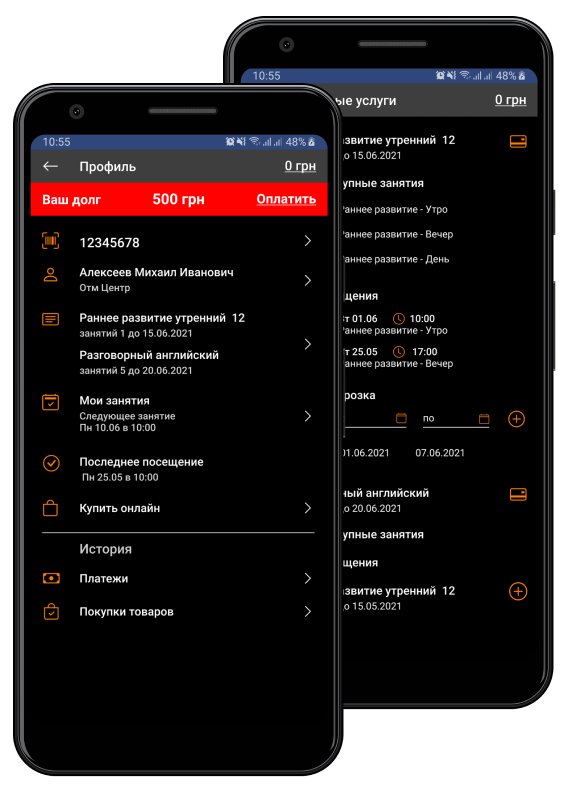
Another common challenge is lesson no-shows. If a student cannot see the current class schedule or simply forgets about a lesson, the school loses a teacher’s time, and the student loses an opportunity to learn effectively. When all information is available in a student portal, the risk of such situations is significantly reduced.
Payment management is another important issue. In many schools, administrators manually remind students about expiring subscriptions, send payment details, and verify incoming payments. This creates additional workload and increases the risk of errors. Providing information about subscriptions, remaining lessons, and the ability to make an online payment greatly simplifies this process.
In practice, a music school management system that includes a student portal helps make interaction between the school, teachers, students, and parents more transparent. Every participant in the educational process has access to up-to-date information exactly when they need it.
That is why a student portal is now viewed not as an additional service, but as one of the core tools for music school digitalization and creating a modern client experience.
What Should a Modern Student Portal for a Music School Include?
The effectiveness of a student portal depends not only on its existence but also on how useful it is for students and parents in everyday use. If the service only allows users to view contact information or general school news, its value will be limited. A modern student portal for a music school, however, should cover most of the typical needs of clients.
The most important feature is access to the current class schedule. Students should be able to see the date, time, and teacher of their next lesson at any moment. This is especially important for parents whose children attend multiple programs or study with different teachers.
Information about subscriptions is equally valuable. Students and parents can independently check subscription validity, completed lessons, and the number of remaining lessons. This reduces the number of inquiries to administrators and helps clients plan their studies more effectively.
Another important section is attendance history. It allows students and parents to quickly review attended, missed, or rescheduled lessons. This is especially relevant for children's music schools, where parents want to monitor lesson attendance regularly.
Homework management is also a useful feature. Teachers can leave recommendations after lessons, while students can return to the materials at any time for independent practice. This approach supports continuity in the learning process and increases student engagement.
Many modern schools also use online lesson booking. Students can independently book additional lessons, register for workshops, reserve spots in groups, or cancel bookings according to school policies. This significantly simplifies organizational processes and reduces administrative workload.
Online payments deserve special attention. The ability to pay for a subscription, settle an outstanding balance, or add funds directly through the student portal makes the service much more convenient for clients. The fewer steps required to complete a payment, the higher the likelihood of continuing studies on time.
It is the combination of these features that transforms a student portal into a comprehensive learning process automation tool. It not only provides information but also allows students to interact with the school without unnecessary calls, messages, or manual processes.
For a music school owner, this means more efficient teamwork, fewer routine tasks, and a higher level of service, which is increasingly becoming an important competitive advantage in the education market.
How Does a Student Portal Increase Student and Parent Loyalty?
In education, the quality of teaching remains the key factor for success. However, the level of service increasingly influences clients’ decisions to continue studying at a particular school. Even excellent teachers cannot always compensate for inconvenience when students and parents must constantly clarify schedules, search for payment information, or wait for responses from administrators.
That is why a student portal becomes an important tool for creating a positive customer experience. It gives students a sense of control over their learning and allows them to access the information they need whenever necessary, not only during school working hours.
For parents of children attending music schools, service convenience is especially important. They want to quickly check attendance, monitor remaining lessons, view payment statuses, and be confident that they will not miss important information. When all data is available in one place, trust in the school grows significantly.
Transparency is equally important. If students can see their attendance history, active subscriptions, the number of completed lessons, and upcoming classes, they are less likely to question the accuracy of records. This helps avoid misunderstandings and simplifies communication between the school and its clients.
Experience shows that convenient digital services also have a positive impact on repeat sales. When students can easily check subscription expiration dates and quickly make an online payment, renewing their studies becomes as simple as possible. As a result, the number of situations where clients delay payments or unintentionally interrupt lessons due to organizational difficulties decreases.
A student portal also strengthens the perception of the school as a modern organization. For many parents, the availability of digital services is already an indicator of a business’s level of organization. If a music school offers convenient online tools, it creates an impression of well-structured internal processes and genuine care for customer comfort.
As a result, the school gains not only more satisfied students but also higher client retention. People are less likely to consider switching to another educational institution when they receive quality service, clear communication, and the ability to solve most issues independently through a student portal.
That is why implementing such a solution today is not only a step toward music school automation but also an investment in the long-term loyalty of students and parents.
How Does a Student Portal Help Reduce the Number of Missed Lessons?
Missed lessons are one of the most common challenges faced by any music school. They affect not only student progress but also the financial performance of the educational center, teacher workload, and the overall organization of the learning process.
In many cases, missed lessons are caused not by a lack of motivation but by simple oversight. Students or parents may forget about a lesson, confuse the lesson time, or overlook schedule changes. Such situations occur especially often in schools with multiple teachers, individual lessons, and frequent schedule adjustments.
A student portal can significantly reduce the number of such situations. Thanks to constant access to the current class schedule, students can always check the date and time of their next lesson. Parents no longer need to search through old messages in messengers or contact administrators for clarification.
The ability to review attendance history provides additional value. Students can see missed lessons, monitor the consistency of their studies, and take greater responsibility for their progress. For parents, this also becomes a convenient tool for supervising the educational process.
If the school uses an online lesson booking feature, students can independently book additional lessons or cancel reservations according to the educational center’s policies. This helps make better use of teachers’ available hours and fill schedules more efficiently.
Another important factor is access to information about remaining lessons and active subscriptions. When students can see how many lessons have already been used and how many remain, they tend to take attendance more seriously and are less likely to miss lessons accidentally.
As a result, the school benefits from more predictable attendance, fewer unexpected schedule changes, and a more stable teacher workload. This has a positive impact on both the quality of education and the overall efficiency of the organization.
That is why today a student portal is viewed not only as a service for client convenience but also as an important learning process automation tool that helps maintain student discipline and engagement.
Why Is a Student Portal Only the First Step Toward a Modern Digital Service?
For many music schools, implementing a student portal becomes an important stage of digital transformation. It allows schools to automate a significant portion of communication, provide students with access to essential information, and reduce the workload on administration. However, client expectations continue to grow over time.
Today, most people interact with services through their smartphones. They check bank accounts, order taxis, pay for purchases, and manage their schedules using mobile applications. Therefore, even the most convenient student portal accessed through a browser gradually becomes less convenient than mobile solutions.
This does not mean that student portals are becoming obsolete. On the contrary, they serve as the foundation of the entire digital ecosystem of an educational center. They already store student data, class schedules, attendance history, homework, subscriptions, and payments. The next logical step is to provide faster and more convenient access to this information.
That is why many schools are gradually moving from web portals to mobile solutions. The reason is simple: the easier it is for students or parents to access the information they need, the more actively they use the service. If checking a schedule requires opening a browser, entering a website address, and logging in, some users will do it less frequently. If the necessary information is available with a single tap on a smartphone, interaction with the school becomes much simpler.
For music school owners, this means a new level of service without changing familiar processes. The data already used in a CRM for music schools and the student portal can be accessed through a more convenient interface optimized for daily use on mobile devices.
Thus, the development of digital services usually happens in stages. First, a school implements a student portal that solves key organizational tasks. Then comes the need to make access to these features even faster and more convenient. At this stage, many educational centers begin to consider their own mobile app for a music school as a natural extension of the existing student and parent service system.
What Opportunities Does a Mobile App Create for a Music School and Its Students?
If a student portal solves the challenge of accessing information, then a mobile app for a music school makes this interaction even faster and more convenient. The goal is not to add features for the sake of technology but to increase student and parent engagement in the learning process.
One of the main advantages of the mobile format is the constant presence of the service on the user's smartphone. Students do not need to open a browser, search for a website, or enter login credentials every time they need to check their schedule or lesson balance. All necessary information is available in just a few taps.
Push notifications are especially useful. Unlike emails or messages sent through various messengers, they are delivered directly to the app and are much more likely to be noticed. Schools can automatically send reminders about upcoming lessons, notify students of rescheduled classes, or inform them about important schedule changes.
These reminders help further reduce the number of missed lessons. Students and parents receive timely information, which positively impacts attendance and discipline.
The ability to quickly manage subscriptions is equally important. Through a mobile app for a music school, users can view remaining lessons, check package expiration dates, and monitor their balance without contacting an administrator.
Online payments also become more convenient. When users can pay for a subscription or settle an outstanding balance directly from their smartphone, the number of on-time payments typically increases. For the school, this means less manual work and more stable cash flow.
It is also worth highlighting the ability to inform students through school news. Concerts, open lessons, workshops, competitions, or operational updates can be published directly in the app. This creates an additional communication channel with the audience.
For parents of children attending music schools, timely access to information through push notifications is especially valuable. They can quickly learn about schedule changes, upcoming events, or subscription expiration dates. At the same time, the school does not need to maintain separate chats or spend resources sending individual messages to every client.
As a result, a mobile app for students becomes a natural extension of the student portal and helps make the service even more convenient, modern, and accessible for everyday use.
Conclusion: Modern Service Begins with Accessible Information

Just a few years ago, having a student portal could be considered an additional advantage for a music school. Today, the situation has changed. Students and parents expect quick access to schedules, subscription information, attendance history, and the ability to make online payments without contacting an administrator.
That is why a student portal is gradually becoming one of the fundamental elements of high-quality service. It helps improve communication with students and parents, reduces the number of routine inquiries to school staff, simplifies payment management, and makes the learning process more comfortable for everyone involved.
For educational center owners, it is also an important business development tool. When a significant portion of operations is automated, the team can spend more time working with clients, developing new programs, and improving educational quality. That is why implementing a student portal is an important step toward music school automation and building a modern service system.
Along with the development of digital services, the role of mobile technologies naturally continues to grow. If a student portal provides access to information, a mobile app for a music school makes that access as fast and convenient as possible. Push notifications, lesson reminders, subscription management, school news, and online payments help maintain continuous communication with clients and increase their engagement.
The best results are achieved when the student portal, mobile app, and CRM for music schools operate as a unified system. This approach makes it possible to create a modern service for a music school, ensure transparency across all processes, and build comfortable interaction between administration, teachers, students, and parents.
Ultimately, everyone benefits: the school gains a more efficient organization of work, students receive convenient access to the learning process, and parents have confidence that all the information they need is always at their fingertips.
Get a Consultation