
CRM system for automating schools and foreign language courses
The Classberry CRM system is designed to automate business processes in schools and studios, as well as foreign language courses. The goal of the Classberry CRM system is to help organize work with clients, internal business processes, and also provide detailed reporting on each component of your business.
register a foreignlanguage school
 Setup
Setupin 10 minutes
 Free
Freetrial period
The Classberry CRM system is:
an automation system that provides a full set of tools to unlock the potential of your language center, increase its profitability and competitiveness, and boost attendance of your center by 5–10 times in the shortest possible time.
A complete set of tools for your studio and language school operations
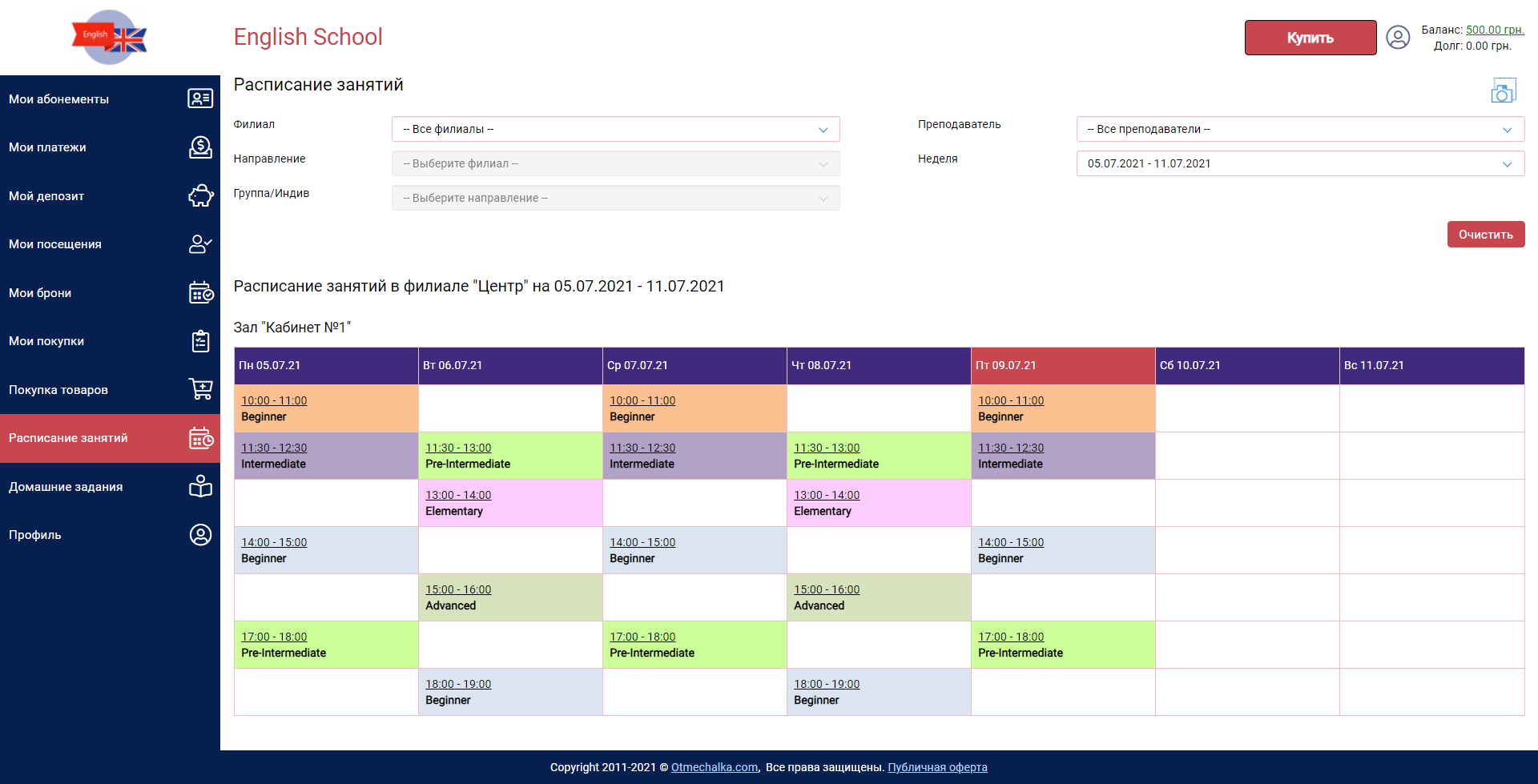
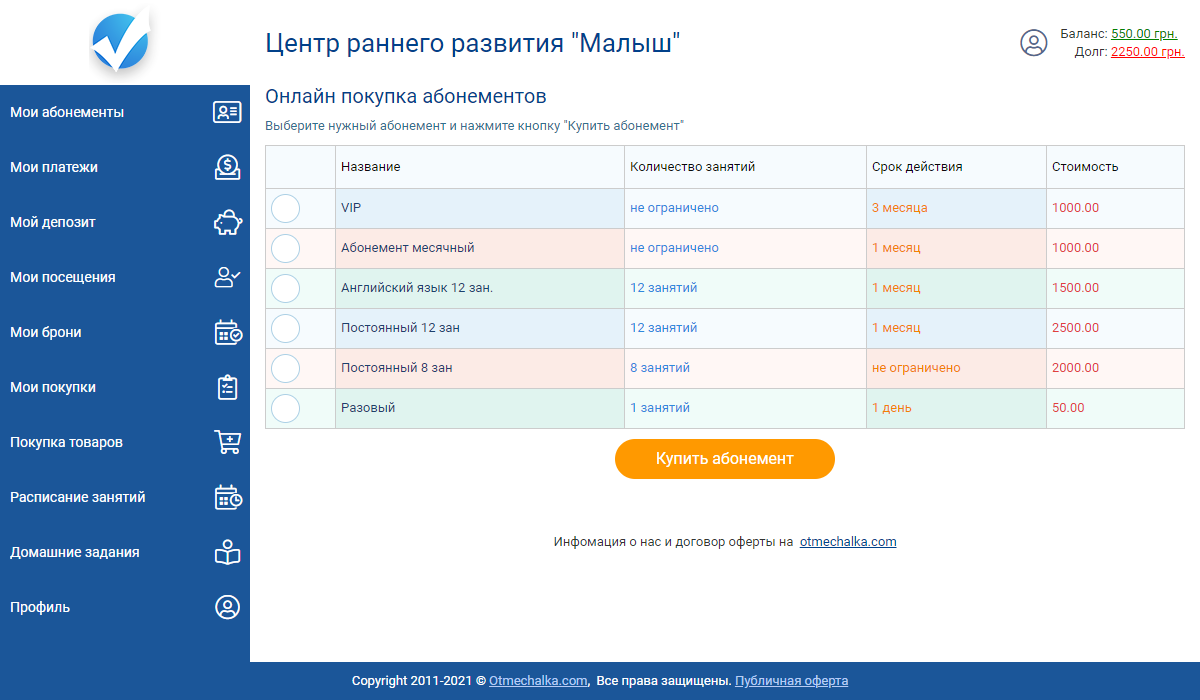
Are you already selling subscriptions and related products online?
Classberry CRM will fully solve the issue of automating online sales of subscriptions and products, online debt repayment, and deposit top-ups.
In addition, you will get a personal account for each client, where they will be able not only to purchase subscriptions and products, repay debts, and top up deposits, but also view information about subscription expiration dates, remaining classes, attendance history, purchases, and also independently book or cancel classes.
We also provide the ability to:
- quickly connect multiple payment systems relevant to your country;
- automatically record online sales in CRM;
- generate reports for both online and offline sales.
And you can brand the client’s personal account in your corporate colors yourself using your logo and simple color palette settings for each page element.
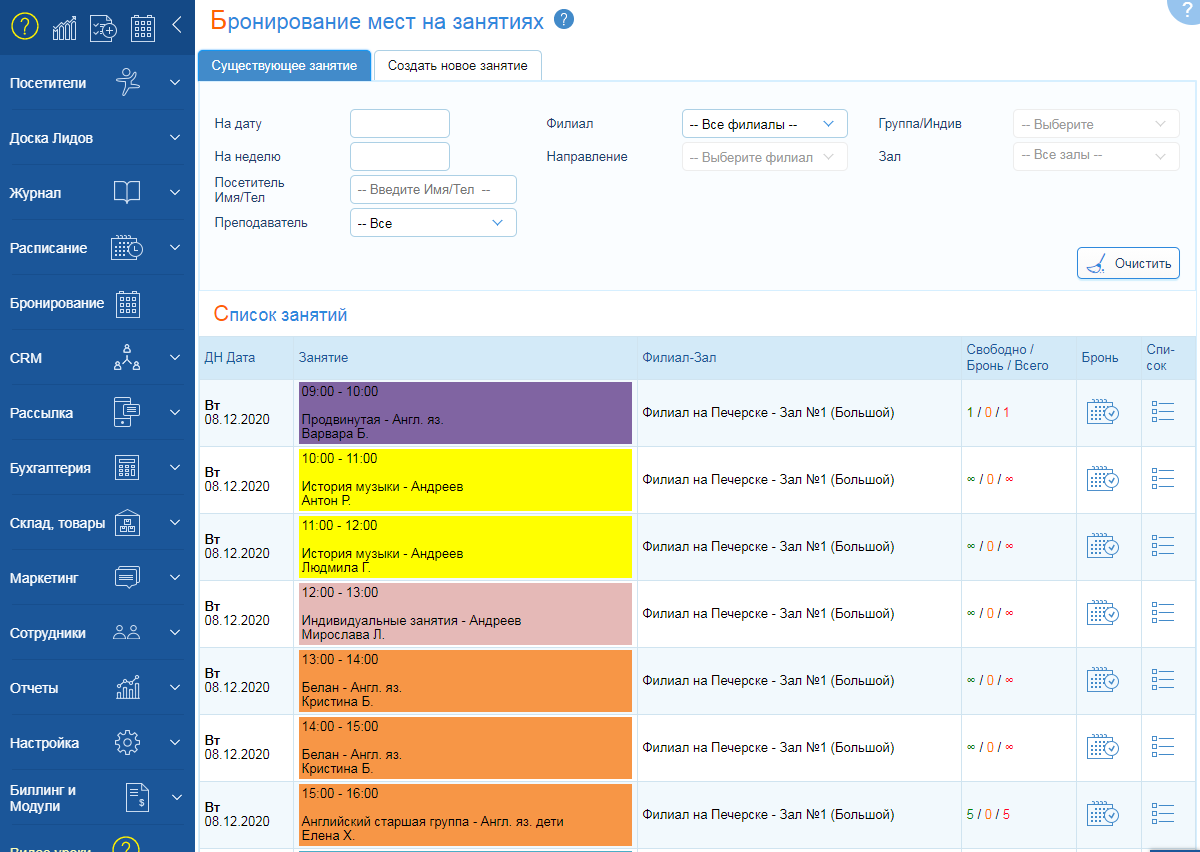
Tools for working with schedules and a user-friendly interface make the schedule not only clear and visual but also multifunctional.
- Set up the schedule in the system.
- Create a recurring schedule for a year ahead in a few clicks.
- Add individual lessons in advance or after they are conducted.
- Automatically account for teacher payments for group and individual classes.
- Add the schedule to your website.
- Receive booking requests directly from the website or the client’s Personal Account.
- Share the schedule link on social networks and messengers.

The schedule also includes special notifications that help avoid creating overlapping classes in terms of time, rooms, and teachers.
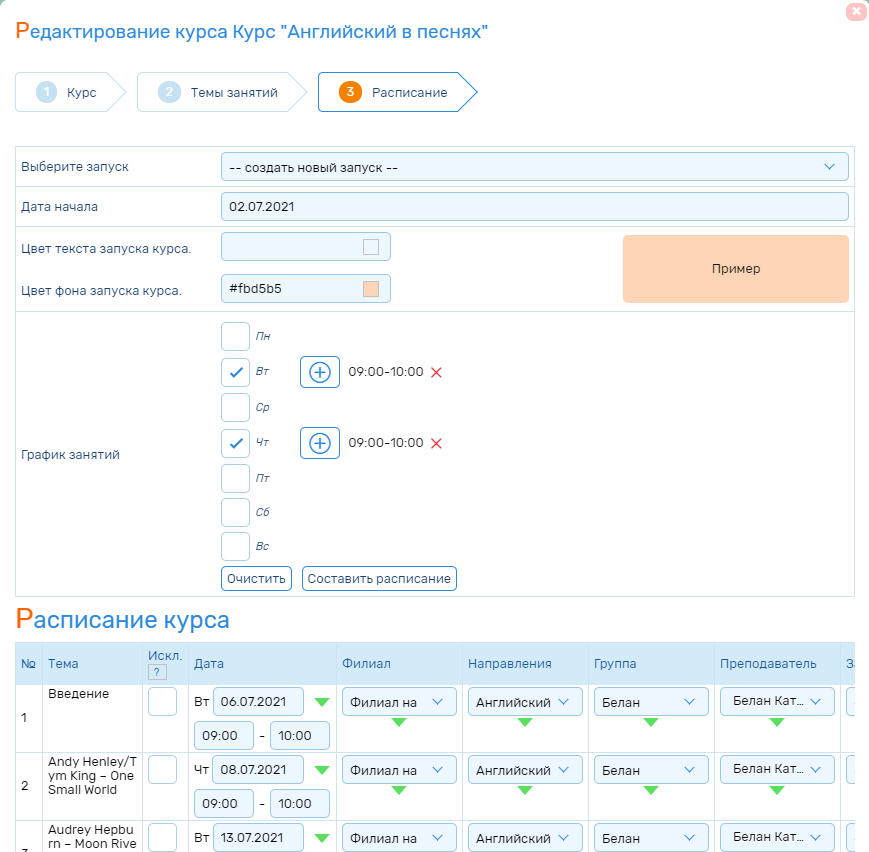
Classberry CRM offers the best set of tools for organizing and systematizing the learning process when it comes to subscription-based classes or courses:
- create courses and sequences of thematic blocks directly in the system;
- plan launches and group capacity;
- manage course and class schedules: rescheduling and substitutions due to holidays and карантин;
- enroll clients in classes online or through your administrators;
- track completed and missed topics;
- assign homework via the client’s Personal Account.
To help your organization grow and develop, Classberry CRM provides a wide range of useful tools for working with potential and existing clients!
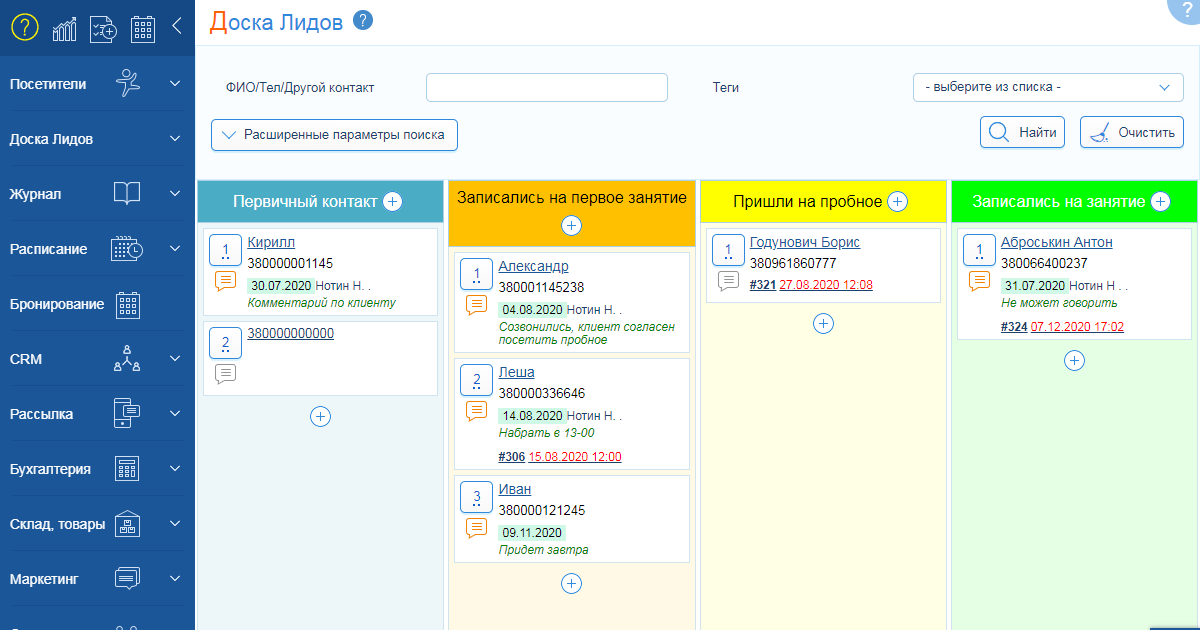
- Manage potential clients on the leads board.
- Create and assign the necessary statuses to your clients.
- Segment clients using tags.
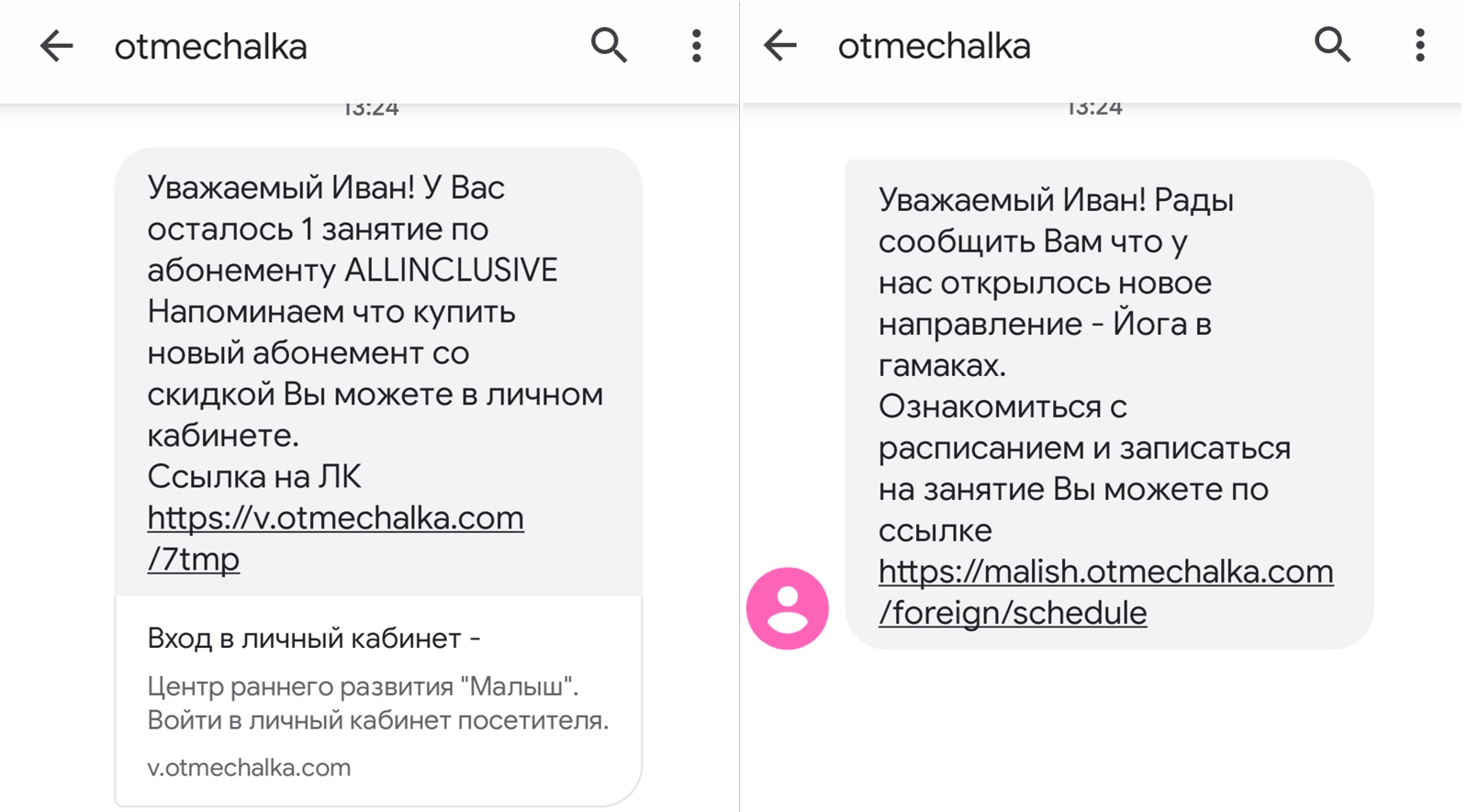
- Set up and use automated actions: automatic mailings, status changes, or task creation depending on various events (subscription expiration, trial lesson attendance, etc.).
- Track forgotten and lost clients.
- Build a sales funnel considering your specific client journey stages.
- Set tasks with reminders.
- Use integration with amoCRM.
Classberry CRM will show how effectively your communication methods work and allow you to store all communication data with clients in one place. This is made possible by:
- integration with IP telephony;
- feedback forms;
- mailings via SMS, Email, and Telegram;
- chat with an administrator via the client’s Personal Account;
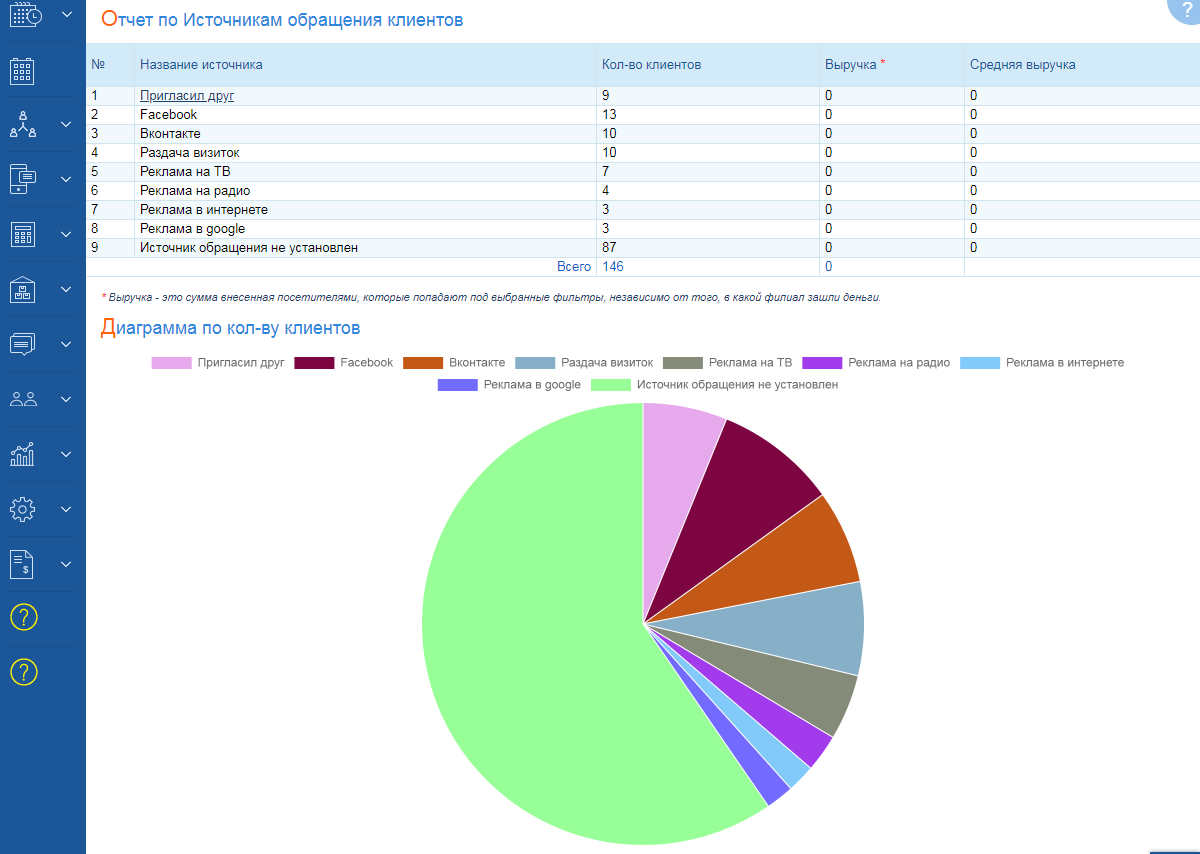
- reports on communication channels and CRM module;
- full client history on one page.
Using Classberry CRM, you will never lose information about client payments, debts, one-time contributions, and other financial operations.
Classberry CRM allows you not only to maintain financial history for clients but also to account for a wide range of financial operations necessary for full company financial management:
- linking multiple cash and non-cash accounts to one branch or center;
- cash register transfer during administrator shift opening/closing;
- accounting for various additional income/expense items (rent, water purchase, repairs, etc.);
- transfer of funds between internal accounts or from branch to branch;
- cash collection;
- purchase of goods;
- calculation and payment of salaries;
- surpluses and shortages in cash registers;
- fees for non-cash accounts, etc.
A wide range of detailed financial reports will allow you not only to control numerous financial operations but also to understand who performed a particular operation, when it was done, and how much revenue each employee generated for the company.
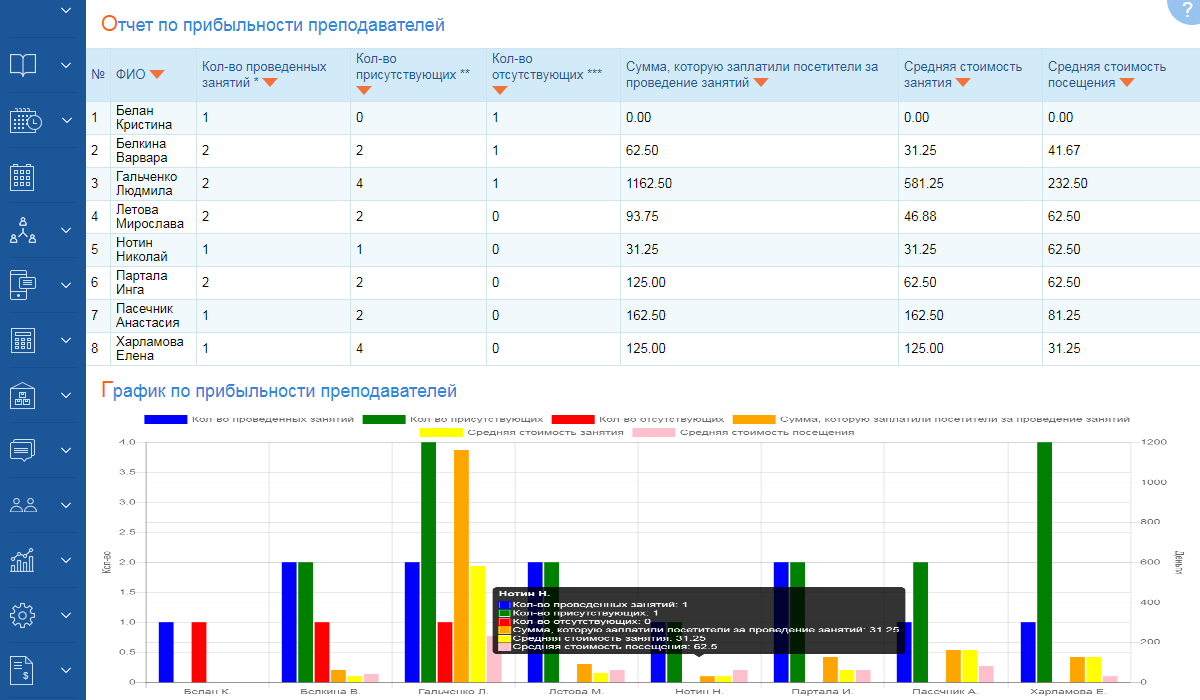
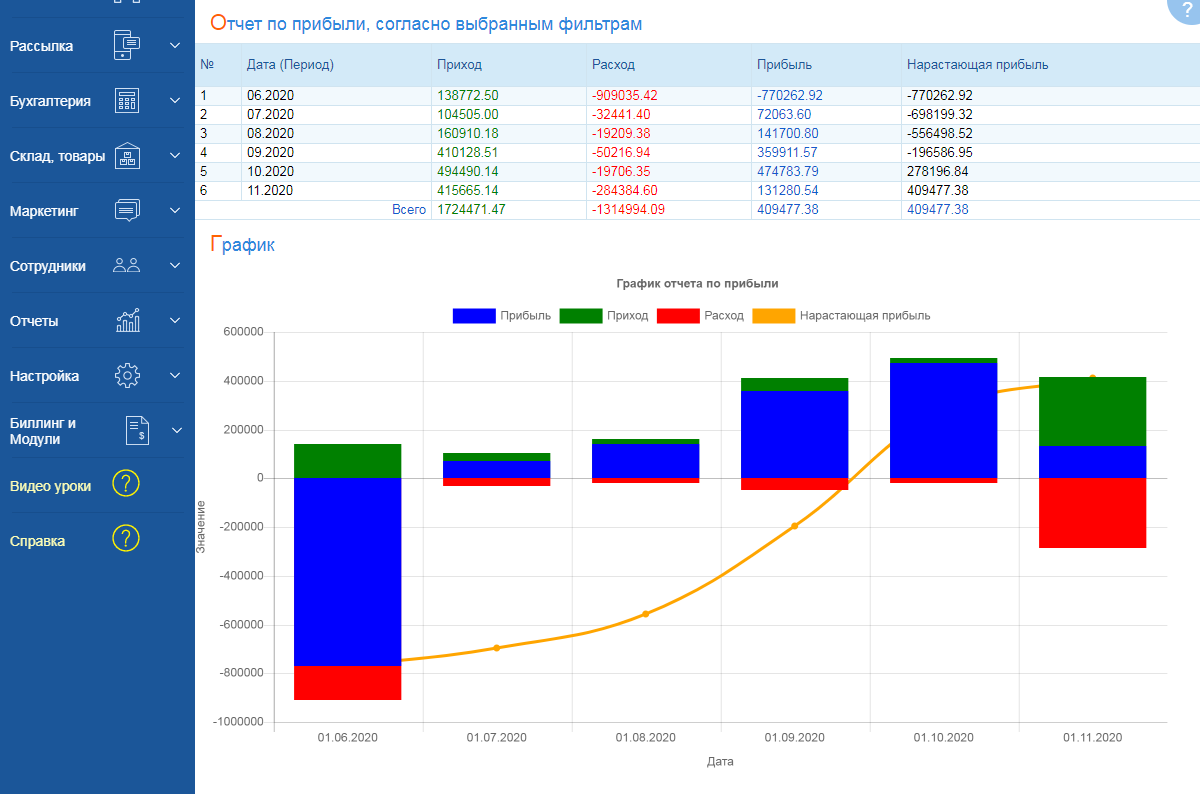
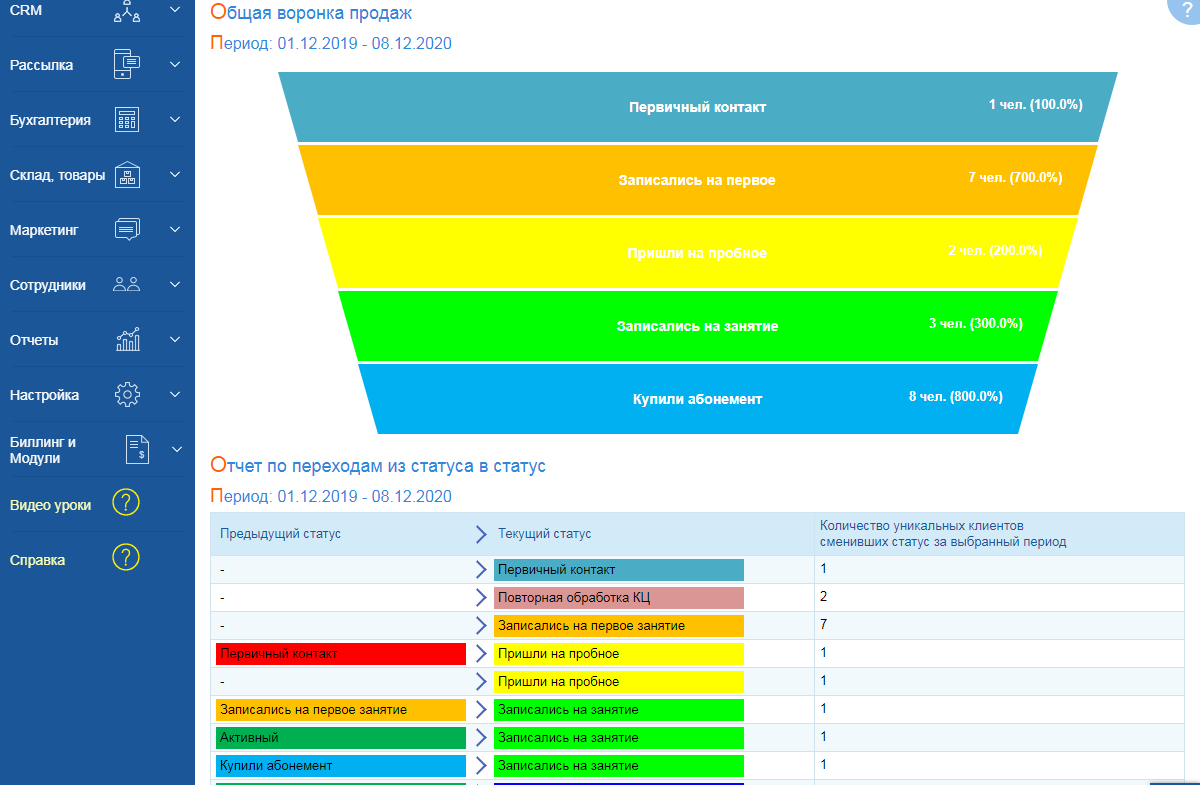
Classberry CRM has all the necessary reports that are generated instantly based on the statistical data of your center.
- Client base growth.
- Inactive clients.
- Profit and loss report.
- Full financial report.
- P&L report.
- Attendance list report and attendance and performance records.
- Report on past clients and reasons for churn.
- Active and sold subscriptions, etc.
With Classberry CRM, you get more than 50 reports in various dimensions, developed based on many years of experience of real managers of language schools and centers.
With us you will receive high-quality
service and data security guarantee
 01
01 02
02 03
03 04
04 05
05 06
06Pricing
with additional modules
active visitors
without additional modules
active visitors
without additional modules
active visitors
without additional modules
active visitors
Our clients’ reviews
We have been using the Classberry CRM system since March 2025. At first sight, we were impressed by the app that can be shared with students, as it allows them to independently monitor their membership status and view the class schedule.
We also can’t fail to mention the ability to share news and event announcements within our community.
And also grateful for the prompt response from the technical support team.

It is very nice that we finally found a convenient CRM system for ourselves. There are many offers on the market, but most are general-purpose, while "Classberry" focuses on a specific niche — education.
Excel tables can no longer function as efficiently as we would like. It is great that the developers of "Classberry" are always ready to help, train, and improve the system if needed. The system has a very pleasant format and style, and warm colors create a comfortable working environment.
I can confidently recommend "Classberry" to everyone working in the education field.



















Get started in just 10 minutes



Already working with us


Frequently asked questions
Request a consultation
By submitting the form, you agree to the privacy policy

Three Reasons Why a Dedicated Mobile App Increases the Perceived Value of Language Courses
The language school market has become one of the most competitive segments of the education industry. In most cities, a prospective student can choose from dozens of schools, online platforms, private teachers, and tutors offering similar learning programs. In such an environment, many school owners are forced to compete not through service quality but through price, gradually lowering tuition fees and reducing their own profitability.
The problem is that teaching methodologies, textbooks, and lesson formats are very similar among most market players. For clients, the difference between schools is often not obvious. If people do not see additional value, they can easily switch to competitors or choose cheaper language courses. This becomes especially noticeable during the off-season, summer holidays, or after completing a language level, when students decide whether to continue their studies.
At the same time, acquiring new clients is becoming increasingly expensive. Advertising costs are rising, competition for leads is intensifying, and marketing investments can only be recovered when a student studies for several months and progresses through multiple levels—for example, moving from A2 to B1, then to B2, and beyond. That is why customer retention and increasing customer lifetime value (LTV) have become just as important for language school owners as attracting new students.
Additional challenges arise from operational routines. Class schedules change frequently, homework assignments get lost in messengers, and administrators answer dozens of repetitive questions about lesson balances and payments. All of this consumes the team's time and negatively affects the customer experience.
That is why more and more school managers are implementing a mobile app for language schools, which becomes not just an additional communication channel but a full-fledged tool for increasing the value of educational services. A dedicated language school mobile app helps address students' key needs, makes the service more modern and convenient, and creates a noticeable difference between your school and competitors.
Most importantly, such a language school app helps increase customer loyalty, boost course sales, automate routine processes, and build a premium brand perception without constantly increasing advertising budgets. Let us examine three key reasons why a dedicated mobile app becomes a competitive advantage for a modern language school.

Reason #1. Student Portal as the New Standard of Language Learning Service
Even today, many language schools communicate with students through dozens of chats in Telegram, Viber, or WhatsApp. At first glance, this may seem convenient because messengers are familiar to everyone. However, as the number of groups and students grows, this approach starts creating more problems than benefits.
Homework assignments get lost among messages, links to online lessons must be searched manually, and information about lesson rescheduling becomes mixed with everyday conversations. This is especially difficult for parents of children attending language courses. They regularly contact administrators with the same questions: how many lessons remain, when the next lesson is scheduled, whether the course has been paid for, and whether the child attended the last lesson.
For the administration, this means dozens of repetitive requests every day. Staff spend their time not on school development or working with new clients, but on constantly providing reference information. As a result, operational costs increase while service speed declines.
This is where a mobile app for students becomes invaluable, effectively transforming into a modern student portal. All necessary information is stored in one place and available 24/7 without the involvement of an administrator.
By opening the app, students or their parents can view the following in just a few seconds:
This level of transparency has a much greater impact on a business than it may seem at first glance. When clients can see all information in real time, their trust in the school automatically increases. They no longer worry about lost payments or incorrectly calculated attendance. All information is available without phone calls or messages.
For modern consumers, convenience often becomes just as important as the educational service itself. People are used to managing bank accounts through smartphones, ordering taxis with a few taps, and tracking purchases through mobile services. They expect the same level of convenience from educational centers.
That is why a mobile app for schools is gradually evolving from a nice bonus into a new service standard. If one language school offers only messenger chats while another provides a full-featured customer portal, the choice becomes obvious for many students even when tuition fees are identical.
Another important advantage is the reduction of workload for the administrative team. Some inquiries disappear entirely because clients can find the necessary information themselves on their smartphones. As a result, employees can devote more time to service quality, working with new leads, and developing the school.
From a business perspective, this means not only increased student loyalty but also reduced operational costs. That is why modern language school automation increasingly begins not with internal processes but with improving the customer experience through a convenient digital service.
The easier it is for students to manage their own learning process, the more likely they are to remain with the school for the long term. And long-term loyalty always costs a business less than constantly searching for new customers.
Reason #2. Automated Management of Lesson Cancellations and Course Renewals
One of the most painful challenges for any language school is last-minute lesson cancellations. Nearly every school owner has faced a situation where a student informs them about an absence 10–15 minutes before the lesson starts or does not respond at all. The teacher has already reserved time in their schedule, the classroom is booked, and the school is forced to decide a difficult question: should the lesson be deducted or should an exception be made for the client?
In either case, someone remains dissatisfied. If the lesson is deducted, conflicts with the student may arise. If the lesson is preserved, the company effectively absorbs the financial loss. When dozens of such cases accumulate throughout the month, they begin to significantly affect the profitability of the business.
Another common challenge is related to payments. In many schools, administrators send messages every day such as: “Your course package is about to expire,” “Don’t forget to pay for the next month,” or “You have two lessons remaining.” This manual work consumes a tremendous amount of time, while the effectiveness of such reminders is not always high.

In addition, the human factor never disappears. Someone forgets to contact a client, someone accidentally misses a message, and someone postpones a payment and simply forgets about it. As a result, the school loses part of its revenue, while students gradually drop out of the learning process.
That is why a modern mobile app for a language school helps automate policies related to course packages and attendance. Instead of an administrator personally explaining the cancellation policy to every student, these rules become part of the digital service.
For example, if a student cancels a lesson after the established deadline, the system automatically applies the school's rules and deducts the lesson according to the policy. In this case, the administrator does not become the “person responsible” for an unpleasant decision. Clients understand that the same transparent rules apply to all students.
For the business, this means more stable revenue, fewer conflicts, and a more predictable workload for teachers. For students, it means clear terms of cooperation without unpleasant surprises.
An equally important feature is online lesson payments. When clients can renew their studies directly through a smartphone, the number of missed payments decreases significantly. There is no need to call an administrator, request payment details, or search through old chat messages. Just a few taps, and the payment is completed.
The combination of online payments and automatic push notifications is particularly effective. The system can notify students in advance that their course package is about to expire or that only a few lessons remain on their balance. At that moment, the app offers a quick course package renewal, without waiting for the client to accidentally drop out of the learning process.
For a language school, this has a direct financial impact. The less time that passes between the completion of one lesson package and the purchase of the next, the higher the overall conversion rate for repeat sales. Essentially, the system helps automate course package sales and reduces dependence on the human factor.
The accounting department also benefits significantly. Automated course package management makes it possible to always see up-to-date information regarding payments, used lessons, and future revenue. School owners gain a more accurate understanding of the financial situation and can plan development based on real numbers rather than rough estimates.
As a result, all parties benefit. Students receive a convenient service and the ability to pay for lessons in just a few clicks. Administrators are freed from a large number of routine tasks. And the school owner gains a more stable cash flow, fewer lost clients, and a higher rate of repeat sales.
That is why, for many modern educational centers, a mobile app becomes not just a communication channel but a full-fledged tool for revenue management and student retention.
Reason #3. Moving from the Budget Segment to the Premium Category
Most language schools try to increase profits by attracting more students. However, there is another path—enhancing the perceived value of the service in the eyes of clients. This approach helps avoid constant price competition and creates a more stable and profitable business.
The problem for many educational centers is that clients perceive their services as ordinary foreign language lessons. If there is only a teacher, a textbook, and a few lessons per week, comparing one school to another becomes very easy. In such cases, price often becomes the deciding factor.
That is why modern language schools increasingly compete not only through their educational programs but also through the level of service they provide. And this is where a dedicated mobile app for a language school becomes an important positioning tool.
Consumer psychology is quite straightforward. When people see that a company has its own branded app, they automatically perceive the business as more organized, modern, and technologically advanced. This approach is associated with large service companies and well-known educational platforms that actively invest in customer experience.
In practice, clients begin evaluating not only the lessons themselves but the entire experience of interacting with the school. Learning ceases to be a collection of separate lessons and becomes a complete digital ecosystem where all necessary tools are available in one place.
Through a mobile app for students, learners can view schedules, monitor their lesson balance, receive notifications about upcoming classes, track attendance, and pay for lessons without additional calls or messages. All of this saves time—and time is increasingly becoming the most valuable resource for modern clients.
For parents of children attending language courses, this convenience is even more important. They can quickly check information about their child’s learning progress without contacting the administration. This creates a sense of control and confidence that the school operates transparently and professionally.
As a result, clients begin comparing the school not with a private tutor but with high-quality technology-driven services. And that is an entirely different competitive category. When people receive not only lessons but also a convenient service experience, they are far less likely to look for cheaper alternatives.
That is why having a dedicated mobile app for schools often makes it possible to justify higher tuition fees without negative reactions from clients. They see additional value that cannot be measured solely by the number of academic hours.
For school owners, this creates an opportunity to gradually move away from a model based on constant discounts and toward a model of service differentiation. Instead of competing for the cheapest course package, the school builds a strong brand associated with quality, convenience, and a modern approach to education.
The long-term effect is equally important. When students become accustomed to using the app, managing their studies through it, and accessing all necessary services in one place, the likelihood of switching to competitors decreases. Changing schools becomes less convenient because clients would lose not only a teacher but also a familiar digital service.
This is how additional loyalty is built, directly affecting student retention between language levels. If a school successfully guides a student from one proficiency level to the next, their customer lifetime increases, and the cost of acquiring new students is recovered much faster.
Ultimately, a dedicated app helps a language school shift from competing on price to competing on service quality. And this is one of the most sustainable development strategies in today’s educational services market.
The Synergy of a Mobile App and CRM for a Learning Center: A Unified Business Ecosystem
It is important to understand that even the best mobile app will not deliver maximum results if it operates separately from the school's internal business processes. That is why a modern mobile app for a language school should be part of a unified digital ecosystem and work in conjunction with a professional CRM for a language school.
In practice, educational center owners often face situations where data is stored in different places. Schedules are managed in one program, payments are recorded in spreadsheets, attendance is tracked manually, and communication with students takes place through messengers. As a result, the team spends significant time duplicating information and constantly verifying data.
This approach not only slows down operations but also creates a risk of errors. An incorrectly recorded payment, an outdated schedule, or a mistake in lesson balances can negatively affect customer trust and the school's reputation.
That is why a modern language school management system should provide automatic data exchange between all tools. When a mobile app is integrated with a CRM, clients always see up-to-date information without any additional actions from administrators.
For example, a student opens the app and views their class schedule. If an administrator has just made changes in the CRM system, they are automatically displayed in the student portal. The same applies to attendance records, payments, remaining lessons, and other important information.
When clients make an online lesson payment through the app, the information is instantly transferred to the CRM. Administrators do not need to manually confirm payments or move data between different services. All processes occur automatically and synchronously.
Another major advantage is effective course package management. The system automatically tracks the number of used lessons, remaining lessons, and package expiration dates. As a result, school owners receive reliable data on group utilization, student activity, and future revenue.
For school owners, this means much more than convenience. Comprehensive language school automation makes it possible to make management decisions based on real performance indicators rather than intuition. It becomes easy to evaluate course renewal rates, administrator performance, teacher workloads, and revenue trends.
This type of integration becomes especially valuable when scaling a business. If a school currently has only a few groups, some processes can still be managed manually. However, when the number of students grows into the hundreds, manual management becomes a serious obstacle to growth.
That is why education business automation should cover both internal company processes and customer interactions. The CRM system is responsible for data management, analytics, and operational processes, while the mobile app becomes a convenient point of contact with students.
As a result, school owners receive a fully controlled system where every customer action is automatically reflected in the CRM, and every change made in the CRM instantly becomes available in the app. This is how modern language school management works when focused on sustainable growth and high-quality service.
Most importantly, this model reduces business dependence on the human factor. Routine operations are handled by the system, allowing the team to focus on school development, improving educational quality, and working with customers. This creates a solid foundation for scaling and building long-term competitive advantages.
Conclusion
A dedicated mobile app for a language school is no longer a technological “option” reserved for major market players. It has become a practical tool for survival and growth in a highly competitive environment. It addresses several critical challenges at once: improving customer convenience, reducing administrative workload, stabilizing financial flows, and building long-term student loyalty.
First and foremost, the app solves core operational challenges. A student portal eliminates communication chaos, provides transparent access to learning information, and reduces the number of routine inquiries directed to administrators. This creates a sense of order and trust that directly influences a client’s decision to stay with the school.

Next, the automation of cancellations, payments, and course renewals enables schools to move from manual management to a predictable system. Online lesson payments, automatic reminders, and effective course package management reduce revenue losses and minimize conflicts. The business gains a more stable cash flow and becomes less dependent on the human factor.
From a market perception perspective, a mobile app elevates a language school into the premium service category. Clients begin to view learning not simply as a series of lessons but as a modern digital service with a high level of convenience. This makes it possible to justify higher tuition fees without reducing demand.
It is also important to emphasize the value of CRM integration. Only the combination of a CRM for a language school and a mobile app creates a complete management system where all processes are synchronized and data is updated in real time. This opens opportunities for advanced analytics, business scaling, and operational control at every level.
As a result, a language school gains not just a convenient tool for students but a comprehensive system that increases customer lifetime value (LTV), reduces churn, optimizes costs, and improves profitability. That is why investing in a dedicated mobile app today is a strategic step toward building a stable and predictable educational business.
Get a Consultation24.06.2026

CRM for a language school: how to automate student management, courses, and sales
A language school is not just an educational business. It is a system that operates on a subscription model: students do not come for a single lesson, but stay for months or even years.
That is why the key task is not only to attract new students, but also to retain existing ones, monitor their progress, and regularly renew their learning.
But in practice, most language schools face the same problems: leads get lost, managers work without a system, schedules get mixed up, and some students simply “disappear” after the first month.
In such conditions, a CRM for a language school becomes not just a convenient tool, but the foundation for stable growth and business control.

Where language schools lose money
Many language school owners think that the main expenses are advertising. But in reality, the biggest losses occur within internal processes.

Most often, the problems look like this:
- Lost leads — inquiries from the website, messengers, or calls simply get lost or remain unanswered.
- Poor lead processing — managers do not call back on time or fail to guide the client to booking a trial lesson.
- Low renewal rate — students do not return after the first package of lessons.
- Poor group occupancy — groups are formed chaotically, and some seats remain empty.
- Schedule chaos — overlapping classes, rescheduling, confusion with teachers.
- Lack of manager control — no clear system for who works with clients and how.
As a result, the school loses money not because of a lack of demand, but due to inefficient process management.
What a CRM provides for a language school
A CRM for a language school is not just a contact database. It is a system that brings together all key processes: students, teachers, schedule, sales, and finances.
Instead of multiple spreadsheets, chats, and notes, you get a single environment for managing the school.
Unified student database
All data is stored in one place: no more searching for information in Excel, messengers, or notebooks.
Student profile
Each student has a full profile that contains all important information:
- knowledge level
- group and teacher
- active subscription
- payment history
- outstanding balances (debts)
- attendance
- lesson bookings
- history of inquiries and requests
- manager or teacher comments
This allows you to quickly understand the situation for each student and not lose important details.
Teacher control
CRM also provides transparency in teachers' work: who manages which groups, their workload, how classes are conducted, and whether there are any overlaps.
As a result, the school moves from chaotic management to a structured system where all processes are under control.
Schedule automation
The schedule is one of the most complex parts of managing a language school. Without a system, it quickly turns into chaos: overlapping classes, constant rescheduling, confusion with teachers and classrooms.
CRM allows you to fully structure this process and eliminate most of the manual work.
- Group formation — удобно об'єднувати студентів за рівнем, часом і програмою навчання.
- Class rescheduling — quick schedule editing without losing information.
- Teacher workload control — you can see who works when and where there are free slots.
- Avoiding overlaps — the system helps prevent class conflicts.
For example, if a student wants to change groups or missed a class, an administrator can quickly find an alternative without dozens of messages in chats.
As a result, the schedule becomes not a problem, but a manageable tool that is easy to scale along with the school's growth.
Course sales funnel
In most language schools, sales happen chaotically: some inquiries are processed, some are lost, and some never reach payment.
CRM allows you to build a clear and manageable sales funnel where each lead follows a defined path.
A typical funnel looks like this:
- Lead — an inquiry from the website, messenger, or a call
- Assessment — determining the student’s level
- Trial lesson — introduction to the school
- First subscription — first payment and start of learning
- Repeat sale — continuing learning after the first subscription
- Regular client — ongoing renewals and stable learning
Without a system, customers are lost at each of these stages: the manager forgot to call back, did not schedule a trial lesson, or did not track the payment.
CRM records all stages of working with a client, reminds managers about next actions, and shows exactly where the sales process is “dropping off”.
As a result, you get not just a contact list, but a full-fledged sales system that can be analyzed and improved.
Renewals and repeat sales
The main revenue in a language school is generated not from the first sale, but from renewals. Regular payments create stable income and business predictability.
But without a system, this process often looks random: a student finishes a package — and is simply forgotten.
CRM allows you to automate renewals and repeat sales:
- Reminders about lesson completion — the system notifies the manager or the student in advance.
- Renewal triggers — automatic tasks for the manager at the right time.
- Upsell of additional products — intensives, individual lessons, speaking clubs.
- Repeat sales — bringing students back after a pause.
Instead of chaotic actions, the school gets a controlled process where no student “falls out” of attention.
As a result, retention increases, the average check grows, and the business becomes more stable.
KPIs a CRM should show
A CRM for a language school is not only about process management, but also analytics. Without numbers, it is impossible to understand what works and what does not.
The system should provide access to key performance indicators:
- Lead conversion — how many inquiries turn into payments.
- Retention — how many students continue their studies.
- LTV (Lifetime Value) — how much one student brings on average over the entire period.
- Average check — the average payment amount.
- Group occupancy — how efficiently seats are utilized.
These metrics allow you not just to “keep records”, but to make decisions: improve sales, optimize the schedule, and increase profit.
If a CRM does not provide clear analytics, it does not help grow the business.
Excel or CRM
Many language schools start with spreadsheets: Excel or Google Sheets. At the beginning, it seems convenient and inexpensive.
But as the number of students and groups grows, spreadsheets begin to “break”:
- data is scattered across different files
- there is no unified student history
- it is difficult to control managers
- the schedule is managed manually and often contains errors
- analytics is either missing or takes a lot of time
As a result, instead of saving time, the team spends even more — searching for information, checking, and fixing errors.
CRM solves these problems: it brings all processes together in one system, automates routine tasks, and provides a transparent view of the business.
Spreadsheets are suitable for the start. But for growth, a system is needed.
How to choose a CRM for a language school
There are dozens of CRM systems on the market, but not all of them are suitable for language schools. It is important to choose not just a “CRM”, but a solution that takes into account the specifics of the educational business.
Here is what you should pay attention to:
- Educational specialization — the system should be adapted for schools, not a universal “for everyone” solution.
- Student management — convenient management of students, groups, and the learning process.
- Schedule management — flexible lesson planning, rescheduling, and workload control.
- Sales funnel — the ability to manage all stages of working with leads.
- Subscriptions and payments — tracking lesson packages, payments, and outstanding balances.
- Analytics — clear reports on key metrics.
It is also important to consider ease of use: if the system is complex, the team simply will not use it.
The right CRM does not complicate work, but наоборот — makes it faster and more transparent.
Mistakes when choosing a CRM
The wrong choice of CRM can not only fail to help the business, but also create additional problems. Schools often choose a system that does not match their real needs.
Most common mistakes:
- Choosing based only on price — the cheapest solution often has limited functionality and does not cover key processes.
- Ignoring sales — focusing only on scheduling without working with leads and the funnel.
- Lack of analytics — no ability to evaluate business performance.
- Focus only on scheduling — the system solves one task but does not cover all school processes.
- Complex interface — the team does not fully use the CRM due to inconvenience.
As a result, the CRM is either not used at all or does not deliver the expected effect.
It is important to choose a system that covers all key tasks of a language school, not just отдельные functions.
How CRM increases the profit of a language school
Implementing a CRM directly impacts the financial results of the school. It is not about “convenience”, but about systematic revenue growth.
Main growth points look like this:
- Higher lead conversion — no inquiry is lost, managers work through a clear funnel.
- Better retention — students are more likely to continue thanks to systematic reminders and control.
- Growth of repeat sales — CRM helps bring clients back and sell additional products.
- Schedule optimization — better group occupancy without extra costs.
- Less manual work — process automation saves the team’s time.
As a result, the school gets more revenue from the same resources — without increasing spending on advertising or staff.
That is why CRM becomes not an expense, but an investment in business growth.
Conclusion

A CRM for a language school is not just a tool for managing students or schedules.
It is a full-fledged operating system that unites sales, the learning process, and finances into a single structure.
Without a system, a school operates chaotically and loses money at every stage. With a CRM, it gains control, transparency, and the ability to scale.
If you are planning growth, increasing the number of students, and achieving stable income — doing this without a CRM is much more difficult.
FAQ
Does a small language school need a CRM?
Yes, if you are planning growth. Even with a small number of students, a CRM helps build the right processes from the start and avoid chaos in the future.
What is more important — schedule or sales?
Both. The schedule ensures the quality of education, and sales ensure revenue. CRM allows you to effectively manage both areas simultaneously.
Does CRM help improve retention?
Yes. Thanks to reminders, class tracking, and renewal management, students are much more likely to stay with the school.
How long does CRM implementation take?
On average, from a few days to several weeks — depending on the complexity of processes and the size of the school. Basic functionality can be launched quite quickly.
Try a CRM for a language school
If you want to bring order to your processes, increase conversion, and boost the number of renewals — it is time to move from spreadsheets to systematic management.
A CRM for a language school will help you manage students, schedules, sales, and finances in one place.
Start with a simple step — see how it works in practice.
Get a consultation04.05.2026