
How a mobile app helps a training center sell more subscriptions
Competition in the educational services market is becoming stronger every year. New language schools, children's learning centers, development schools, and training courses actively attract students through advertising, social media, and various promotional offers. However, acquiring a new customer is usually much more expensive than retaining an existing one. That is why it is important for a modern educational center not only to increase the number of new inquiries but also to ensure regular membership renewals and long-term cooperation with students.
In practice, many learning centers lose part of their revenue not because of poor service quality but due to imperfect communication with clients. Students may forget to pay for the next study period, parents do not always monitor the remaining lessons, and administrators physically do not have enough time to remind every client about the need to renew their membership. As a result, some students pause their studies or switch to competitors, even if they are completely satisfied with the quality of the classes.
Another common problem is that information about class schedules, attendance, memberships, and payments is often spread across different channels: messengers, spreadsheets, phone calls, or email. This creates inconvenience for clients and additional workload and sales risks for the administration.

That is why more and more institutions are implementing a mobile app for a learning center as a tool for ongoing interaction with students and parents. A modern mobile app for a learning center not only provides access to important information but also becomes a dedicated channel for communication, sales, and customer retention. Thanks to convenient access to schedules, memberships, notifications, and online payments for classes, users receive a comfortable service experience, while the learning center gains additional opportunities for growth.
The impact of a mobile app is especially noticeable when combined with a modern CRM for a learning center. This combination helps automate customer management, improve membership tracking, simplify membership renewals, and make interactions with students as convenient as possible. As a result, the learning center gains not only more effective learning center management but also stable growth in repeat sales.
Why Do Learning Centers Lose Membership Sales?
Many owners of educational centers believe that the main sales problem is an insufficient number of new inquiries. In reality, a significant portion of losses occurs after the client has already started studying. The student attends classes, achieves results, and is satisfied with the service, but for certain reasons does not renew the membership. If such situations occur regularly, the learning center loses a substantial portion of its profit every month.
One of the most common reasons is the lack of timely reminders. Most people live at a fast pace and do not keep track of the number of lessons they have used. When a membership expires, a student may simply fail to notice it in time. This problem is especially common in language schools and long-term training courses, where students attend classes for many months.
Parents Do Not Always Monitor the Remaining Lessons
For children's learning centers and development schools, the situation is even more complicated. Parents make payment decisions, but without constant access to up-to-date information, they may not know how many lessons their child has left. If reminders arrive too late or do not arrive at all, membership renewal is postponed indefinitely.
In many cases, this does not mean a loss of interest in learning. Parents are simply busy with work, household responsibilities, and other matters. Even a few days of delay can lead to missed classes and eventually a gradual decline in student engagement.
An Administrator Cannot Manually Monitor Every Client
In the early stages of operation, administrators often call clients themselves, remind them about payments, and clarify questions regarding continuing their studies. However, when the number of students grows to hundreds or even thousands, manual monitoring becomes practically impossible.
Administrators must simultaneously work with class schedules, trial lesson bookings, payments, teacher messages, and dozens of other tasks. Under such conditions, some clients inevitably fall through the cracks. Even if the center uses spreadsheets or dedicated software for a learning center, without automated reminders the human factor never disappears.
The Longer the Payment Process, the Lower the Conversion Rate
Another reason for lost sales is related to the purchasing process itself. Imagine this situation: a membership is about to expire, a student decides to continue studying, but to do so they must contact an administrator, wait for a response, receive payment details, make a payment, and send confirmation. Every additional step increases the likelihood that the client will postpone the payment.
At first glance, this may seem like a minor issue. In practice, however, such small inconveniences often lead to the loss of recurring payments. People may forget to return to the payment process, switch their attention to other matters, or simply take a break from learning.
Information Is Scattered Across Different Channels
In many educational institutions, communication takes place simultaneously through messengers, phone calls, email, and social media. Students receive some information from administrators, some from teachers, while membership data may be stored in a completely separate system.
As a result, it becomes difficult for clients to quickly find information about their class schedule, payments, or remaining lessons. When interaction with a learning center becomes inconvenient, customer loyalty gradually decreases, even if the quality of education remains high.
Losses Accumulate Unnoticed
The biggest problem is that each individual loss seems insignificant. One student forgets to renew a membership, another postpones payment, and a third misses the administrator's message. However, if similar situations occur every week, the learning center loses a significant portion of its potential income every month.
That is why sales automation in a learning center becomes not just a way to optimize operations but an important business growth tool. To ensure that clients regularly renew memberships, they must have constant access to up-to-date information and the ability to interact with the center quickly. One of the most effective tools for this is a modern app for a learning center that accompanies students throughout their entire learning journey.
A Mobile App Is Always Close to the Student
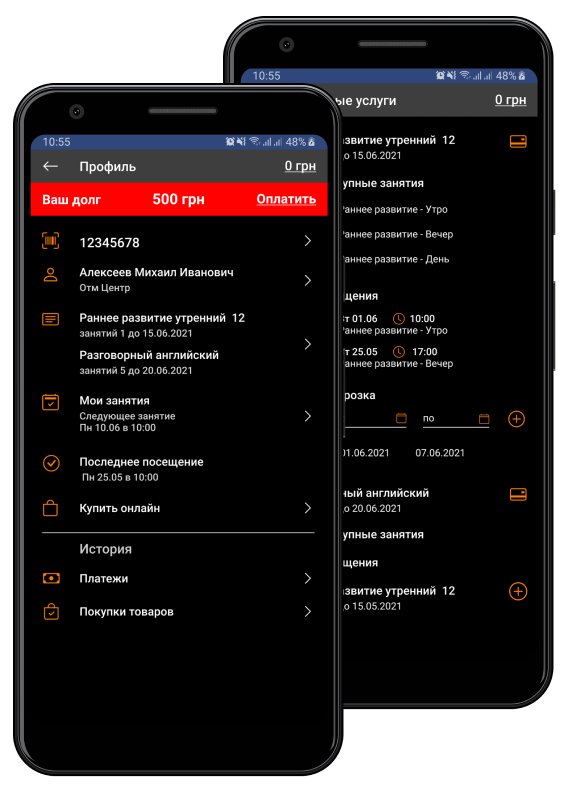
Modern users are accustomed to solving most everyday tasks through their smartphones. Ordering products, paying for services, booking tickets, or scheduling a doctor's appointment can all be done in just a few clicks. The education sector is no exception. If a learning center strives to provide a high level of service, access to key information should also be as simple and fast as possible.
That is why a mobile app for a learning center becomes an important tool for interacting with students and parents. Its main value lies not only in its functionality but also in the fact that all necessary information is available in one place and accessible at any time.
The Student Portal as a Communication Hub
One of the key features of a modern mobile solution is the student portal. It becomes a single access point to all the information that was previously scattered across various communication channels.
Students or their parents can check the current class schedule, review attendance history, see the remaining lessons included in a membership, or clarify information about upcoming classes at any time. There is no longer a need to call an administrator or search through messages in messengers.
When clients quickly receive answers to their questions, their satisfaction with the service increases significantly. A high-quality customer experience directly influences their desire to continue studying at your center.
Class Schedules Always at Hand
One of the most common reasons for contacting an administrator is to clarify the class schedule. Students forget lesson times, are unsure about schedule changes, or want to check the timetable for the following week.
If the current class schedule is available in the mobile app, most of these questions can be resolved independently. Users simply open the app and instantly receive the information they need.
For the learning center, this means reducing the workload on administrators, while clients enjoy a more comfortable interaction with the educational institution.
Transparency Increases Trust
Access to membership information also plays an important role. When students can see the number of used and available lessons, they gain better control over their learning process.
This is especially important for parents who pay for their children's education. Access to lesson balances, attendance data, and payment history creates a sense of transparency and control. As a result, the center gains a higher level of trust from its clients.
In addition, timely access to membership management information helps avoid misunderstandings regarding the number of lessons used or the validity period of lesson packages.
Engagement Directly Affects Membership Renewals
The experience of many educational centers shows that the most loyal clients are those who regularly interact with the school or training courses. When students constantly see their progress, manage their schedule, and easily access the information they need, they feel more engaged in the learning process.
On the other hand, when clients only remember the center when making the next payment or after receiving a call from an administrator, the risk of losing interest in learning increases significantly.
That is why a mobile app for students should be viewed not only as an additional service but also as a customer retention tool. The easier it is for a person to interact with a learning center, the higher the likelihood that they will continue their studies after their current membership expires.
However, even the most convenient customer portal will not deliver maximum results without active communication. To remind clients about payments, inform them about new opportunities, and encourage repeat purchases, learning centers increasingly use automated push notifications.
Push Notifications Help Sell Memberships on Time
One of the biggest challenges for any educational center is that even satisfied clients may forget important actions. A student may be completely satisfied with the training, plan to continue the course, and recommend the school to friends, yet simply miss the moment when their membership is about to expire. As a result, a break in learning occurs, which often leads to losing the client.
That is why timely communication is crucial for stable sales. A modern mobile app for a learning center allows this process to be automated through push notifications and helps maintain constant contact with students without placing additional workload on staff.
Membership Expiration Reminders
One of the most effective automations is notifying users when their membership is about to expire. Instead of having an administrator manually check dozens or hundreds of clients every day, the system sends reminders automatically at the right time.
For example, five or seven days before a lesson package expires, the student receives a notification reminding them to continue their training. The information appears directly on the smartphone screen, allowing the user to quickly make a payment decision.
Such notifications are significantly more effective than random phone calls or emails, which are often ignored.
Tracking Remaining Lessons
Automated reminders about a low lesson balance are equally valuable. Many students do not keep track of their lesson usage and may not even realize that their membership is nearly exhausted.
When the system notifies them that only two or three lessons remain, the client has enough time to decide on renewing their membership. This helps prevent interruptions in the learning process while ensuring stable repeat sales for the center.
This approach works particularly well in children's learning centers, where parents make payment decisions. Timely notifications help avoid situations where a child arrives for a class only to discover that their membership has already expired.
New Groups and Additional Learning Programs
Push notifications can be used not only for payment reminders. They are also an effective way to inform clients about new learning opportunities.
For example, a language school launches a new group focused on preparing students for an international exam. Instead of running a separate advertising campaign, the center can notify current students who are already enrolled and may be interested in continuing or expanding their learning program.
The same approach can be used to promote new courses, summer programs, intensive classes, workshops, or additional lessons. This creates extra touchpoints with clients and opens new opportunities for sales.
Special Offers Work More Effectively
Many educational centers periodically launch promotions or special conditions for continuing studies. However, even the most attractive offer will not deliver results if clients never hear about it.
Push notifications make it possible to quickly deliver information to the right audience. For example, a center may offer a discount for early membership renewal or bonus lessons for those who complete payment before a certain date.
Thanks to the speed and visibility of these notifications, response rates are usually much higher than through traditional communication channels.
Automation Instead of Manual Work
The most important advantage of push notifications is that they work automatically. Even a large educational center with hundreds of students can maintain personalized communication without constant involvement from administrators.
This is especially relevant for organizations actively implementing learning center automation. Instead of spending time on routine reminders, employees can focus more on working with clients, developing new programs, and improving service quality.
As a result, everyone benefits: students receive useful and timely information, administrators are relieved of a significant amount of manual work, and the learning center increases repeat sales and improves membership renewal rates.
However, even the most effective reminder cannot guarantee a purchase if the payment process itself remains complicated or inconvenient. That is why the next important step is enabling payments directly through the mobile app.
Online Payments Shorten the Path to Purchase
There is a simple rule in sales: the fewer actions a client needs to take to make a purchase, the higher the likelihood of successful payment. This principle works equally well for online stores and educational businesses. Even if a student has already decided to continue learning, additional steps can reduce conversion rates and postpone payment indefinitely.
Many learning centers still follow a process where clients must contact an administrator, confirm the payment amount, receive payment details, transfer funds, and notify the center about the completed payment. At first glance, the process may seem simple. In reality, however, people often postpone such actions because they are busy or simply forget to return to the matter later.
That is why online payment for classes through a mobile app becomes an important tool for increasing membership sales. It shortens the path from the purchase decision to the actual payment to just a few taps on a smartphone screen.
Clients Can Pay for Training Anytime
One of the main advantages of mobile services is 24/7 availability. Parents or students do not need to wait for an administrator’s working hours or call the learning center to clarify details.
For example, a child's mother checks the student portal in the evening after work and sees a notification that the membership is about to expire. If the system supports online payments, the renewal can be completed immediately — without phone calls, messages, or additional approvals.
In such a situation, the purchase decision is implemented instantly. If payment must be postponed until the next day, some clients will simply forget about it or return to the issue much later.
Fewer Barriers Mean More Membership Renewals
Sales losses often occur not because clients do not want to continue learning but because of minor organizational inconveniences. A person postpones payment for a few days, misses classes, loses their learning rhythm, and eventually decides to take a break.
The ability to quickly renew memberships through a mobile app significantly reduces the likelihood of such situations. Clients do not encounter unnecessary barriers and can complete the purchase exactly when they are ready.
For the learning center, this means a more stable cash flow and a higher percentage of repeat payments.
A Practical Example from a Learning Center
Imagine a language school with 300 students. Every month, some memberships expire, and the administrator spends a significant amount of time reminding students about payments.
If a student receives a push notification about an expiring lesson package and can immediately proceed to payment through the mobile app, the entire process takes only a few minutes. If they need to message an administrator and wait for a response, some payments will inevitably be postponed.
Even a modest increase of 5–10% in membership renewal conversion rates can have a significant impact on the overall revenue of a learning center throughout the year.
Automation of Financial Processes
For management, an important benefit is not only increased sales but also simplified internal processes. When online payments are integrated into a learning center management system, payment information is automatically added to the database.
Administrators no longer need to manually verify incoming payments or enter information about each transaction. The system automatically updates membership data, payment statuses, and available lessons.
This approach is an important part of educational business automation, as it reduces routine operations and minimizes the risk of errors.
Convenience Directly Impacts Revenue
Modern clients evaluate not only the quality of education but also the overall level of service. When class registration, schedule viewing, membership tracking, and payments are all available in one place, interaction with the learning center becomes much more convenient.
That is why a mobile app is gradually becoming a полноцен sales channel. It not only informs students but also helps them make purchase decisions quickly and complete them immediately. When the membership renewal process becomes as simple as possible, the number of recurring payments naturally increases.
However, a mobile app delivers the greatest results when communication takes into account the individual needs of each client. That is why personalized offers for different student groups play an important role in increasing sales.
Personalized Offers for Different Student Groups
One of the common mistakes learning centers make is using the same approach for all clients. In reality, different groups of students are at different stages of interaction with the educational center and have different needs. What is relevant for a new client may not interest a long-term student who has been studying for several years.
That is why personalization has become an important tool for increasing sales. A modern mobile app for a learning center allows relevant offers to be sent to specific user groups, making communication much more effective.
Special Offers for New Students
After their first interaction with a learning center, many potential clients are not yet ready to purchase a long-term membership immediately. At this stage, it is important to help them take the next step.
For example, after a trial lesson, a student may receive a special offer through the mobile app for their first lesson package or an additional bonus if they purchase a membership within a few days. This approach helps shorten the decision-making process and increase the conversion rate from trial lesson to paying client.
For a language school, this could be a discount on the first month of study; for a development center, an additional lesson; and for professional courses, access to learning materials.
Retaining Existing Clients
Loyal students are one of the most valuable assets of any educational business. They already trust the learning center, are familiar with the learning process, and are much more likely to renew their memberships.
That is why it makes sense to use separate motivation mechanisms for this client category. For example, offering favorable terms for paying several months in advance, bonus lessons, or special conditions for participating in new programs.
When clients feel that the center values their loyalty, the likelihood of continuing cooperation increases significantly.
Reactivating Inactive Students
Virtually every learning center has a database of clients who previously attended classes but stopped studying for various reasons. Some changed their work schedule, some took a temporary break, and others simply lost contact with the center.
These clients are already familiar with your services, so bringing them back is usually much more cost-effective than attracting completely new students.
Through a mobile app, such users can automatically receive information about new programs, new groups, seasonal promotions, or special return offers. Often, a single relevant message is enough to encourage them to resume learning.
Membership Renewal Offers
Personalized offers related to continuing studies deserve special attention. Instead of a standard payment reminder, the center can offer additional value.
For example, a student receives a notification that if they renew their membership before a certain date, they will receive an additional lesson, a fixed tuition rate for the next period, or access to a special course.
Such offers not only encourage faster decision-making but also create a sense of receiving a valuable deal.
Personalization as Part of Sales Automation
In the past, a personalized approach required significant resources and was available mainly to small learning centers. Today, the situation has changed. Thanks to modern sales automation tools for learning centers, personalized communication can work automatically even for hundreds or thousands of students.
The system analyzes membership information, learning history, customer activity, and other parameters, then sends relevant offers to the appropriate user groups. As a result, the learning center generates more repeat sales without increasing the workload of administrative staff.
However, the maximum effectiveness of personalization is achieved when the mobile app does not operate separately but functions as part of a unified digital ecosystem. That is why more and more institutions integrate mobile solutions with a CRM system for learning centers.
How a Mobile App Works Together with a CRM for a Learning Center
A mobile app alone can significantly improve interaction with students, but it delivers the greatest business value when combined with a modern CRM for a learning center. In this case, the mobile app becomes not a standalone service but part of a unified system that connects administrators, teachers, students, and parents.
Integration makes it possible to automate most routine processes and ensure real-time data accuracy. This is especially important for educational centers that aim to scale their business without proportionally increasing administrative staff.
A Unified Client Database and Up-to-Date Information
In many learning centers, customer data may be stored simultaneously in spreadsheets, messengers, accounting software, and various internal documents. This approach complicates operations and increases the risk of errors.
When a mobile app is integrated with a CRM system, all information is stored in a single database. If an administrator changes the schedule, adds a new membership, or records a payment, this data automatically becomes available in the customer portal.
As a result, students always see up-to-date information, while staff work with a single source of truth.
Automatic Membership and Payment Tracking
One of the most important areas of automation is membership management. When handled manually, tracking remaining lessons, package expiration dates, and payments takes a lot of time and often leads to mistakes.
The CRM automatically tracks used lessons, remaining classes, and membership expiration dates. This information is instantly displayed in the mobile app, where students or parents can view it.
In addition, the system allows all financial transactions to be monitored, which is especially important for managers of educational centers who need transparent sales and revenue analytics.
Automating Customer Communications
Without CRM integration, most communications must be handled manually. Administrators send payment reminders, notify students about classes, inform them about new courses, and answer repetitive questions.
When a mobile app for a school works together with a CRM, a significant part of these processes is automated. The system independently sends membership expiration notifications, informs users about schedule changes, reminds them about payments, and helps maintain regular contact with clients.
As a result, communication becomes systematic rather than dependent on the workload of individual employees.
Less Routine Work for Administrators
One of the main outcomes of automation is a significant reduction in manual tasks. Administrators no longer spend hours checking payments, updating student lists, or sending identical messages.
Instead, employees can focus on tasks that truly require attention: working with new clients, improving service quality, organizing the learning process, and developing the center.
For business owners, this means not only saving time but also improving the efficiency of the entire team.
A Unified Ecosystem for Managing an Educational Business
A modern learning center management system has long evolved beyond simply maintaining schedules or tracking students. It helps manage sales, finances, communications, and customer experience within a single digital environment.
In such an ecosystem, the CRM is responsible for internal processes and team automation, while the mobile app provides convenient interaction with students and parents. Together, they create a seamless customer journey — from the first class registration to regular membership renewals.
That is why many centers implementing comprehensive learning center automation view the mobile app and CRM not as separate products but as interconnected tools for business growth. This approach helps increase customer loyalty, boost repeat sales, and create a strong foundation for future expansion.
Conclusion
Today, a mobile app for a learning center is much more than just an additional service for students. It becomes an important tool for communication, customer retention, and educational business growth. Thanks to quick access to information, a convenient customer portal, automated reminders, and online payment capabilities, learning centers gain additional opportunities to increase revenue.
A mobile app helps keep students informed about upcoming membership expirations, simplifies membership renewals, increases engagement, and improves the overall customer experience. As a result, the number of repeat sales grows, while the risk of losing students due to organizational inconveniences is significantly reduced.
The greatest impact is achieved when the mobile app works together with a CRM system. Such integration ensures effective learning center management, automates communications, simplifies payment control, helps manage memberships, and creates a unified customer interaction system.

For a language school, children's learning center, development school, or any other educational project, this means not only improving service quality but also achieving real business growth. That is why a mobile app combined with a CRM has become one of the key elements of modern educational business automation and sustainable learning center scaling.
Get a Consultation